
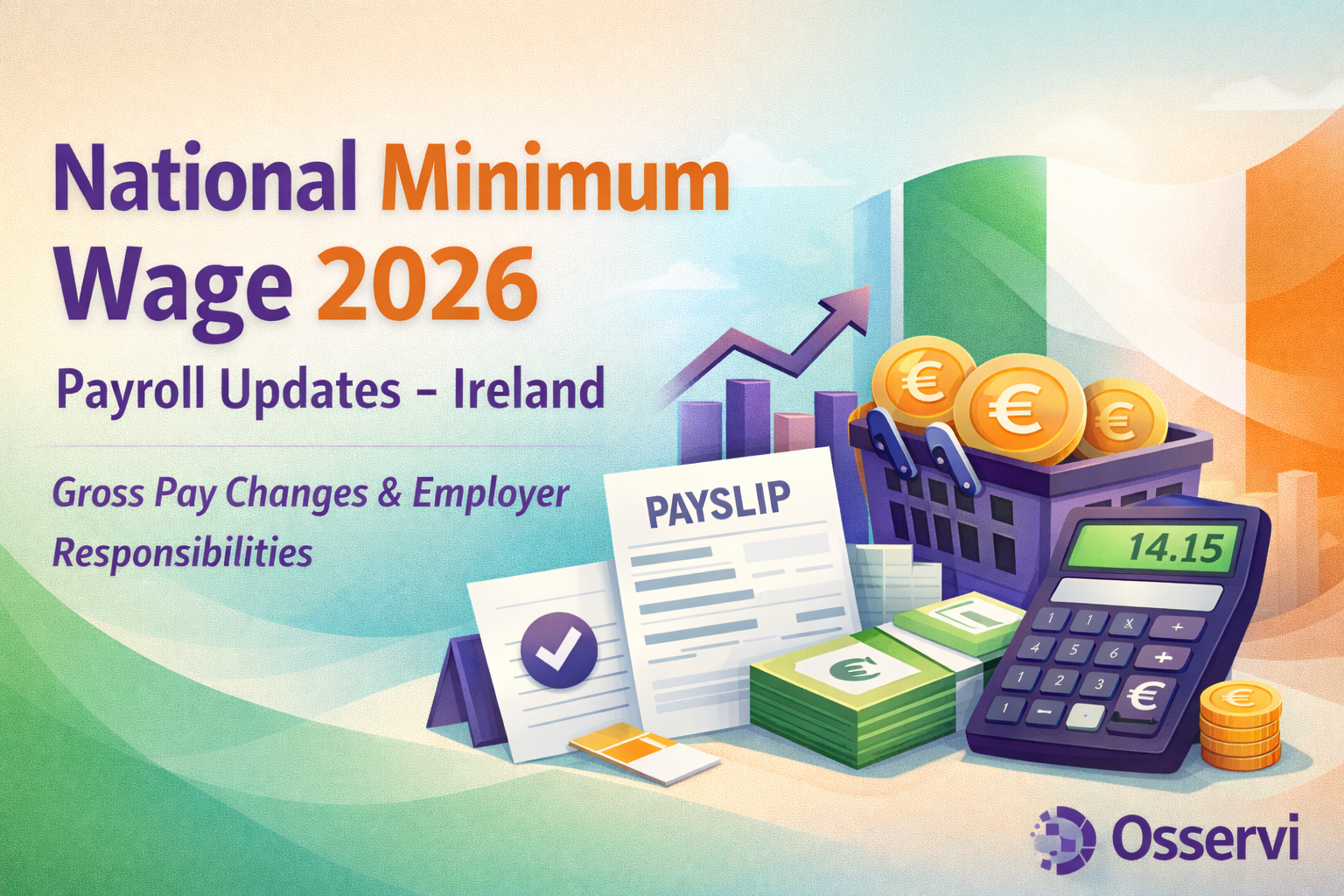
From 1 January 2026, Ireland introduced an increase to the National Minimum Wage, bringing new payroll responsibilities for employers across all sectors. While wage increases aim to support workers and align earnings with living costs, they also require careful updates to payroll systems, employee contracts, and tax calculations.
For employers and payroll managers, understanding how minimum wage changes affect gross pay, PAYE deductions, USC, and PRSI is essential to remain compliant with Irish employment and Revenue regulations.
This guide explains what changed, how payroll is affected, and what practical steps Irish businesses should take in 2026.
What Is the National Minimum Wage for 2026?
As part of ongoing government policy to move toward a Living Wage model, the National Minimum Wage increased to €14.15 per hour in 2026.
This applies to most employees aged 20 and over, while younger workers and trainees may have different percentage-based rates depending on employment status.
For employers, this means:
-
Updating hourly rates for eligible staff
-
Reviewing payroll calculations for weekly and monthly pay cycles
-
Ensuring compliance with employment legislation
Even a small hourly increase can significantly impact overall payroll costs, especially for businesses with large teams or hourly-based roles.
Why Minimum Wage Changes Matter for Payroll Processing
Minimum wage increases are not simply HR adjustments — they directly influence payroll calculations and statutory deductions.
1. Gross Pay Calculations
When minimum wage increases, gross pay automatically rises for affected employees. This can trigger:
-
Higher PAYE tax liabilities
-
Increased USC contributions
-
Changes to PRSI bands
For example, employees previously earning below certain USC thresholds may now move into different tax brackets due to higher gross income.
Payroll teams must ensure that:
✔ Updated hourly rates are reflected in payslips
✔ Overtime and premium pay are recalculated
✔ Holiday pay and statutory leave entitlements reflect the new base wage
2. Impact on USC and PRSI Contributions
A higher minimum wage often pushes employees into slightly higher annual earnings ranges. This means payroll software must correctly calculate:
-
Universal Social Charge (USC) deductions based on updated income
-
PRSI contributions for both employer and employee
In 2026, these interactions are especially important because USC thresholds and PRSI rates have also seen adjustments. Without accurate updates, payroll errors can occur quickly across multiple pay periods.
3. PAYE and Revenue Reporting Requirements
Under Ireland’s real-time PAYE system, employers must report pay and deductions to Revenue every time employees are paid.
Minimum wage increases affect:
-
Revenue Payroll Notifications (RPNs)
-
Tax credit calculations
-
Year-to-date payroll reporting
Payments processed after January 2026 must reflect the new wage rate — even if work was scheduled earlier. This is a common compliance issue during the first payroll runs of the year.
Common Payroll Mistakes Employers Should Avoid
Many payroll errors occur during wage transitions. Employers should watch for:
❌ Failing to update hourly rates for all eligible employees
❌ Applying old wage rates to overtime calculations
❌ Forgetting to adjust part-time or seasonal staff wages
❌ Not reviewing gross pay thresholds affecting USC or PRSI
Even small discrepancies can lead to employee disputes or Revenue corrections later in the year.
Additional Employer Responsibilities Beyond Payroll
Minimum wage increases also impact wider business operations, including:
-
Employment contracts and wage agreements
-
Budgeting and labour cost forecasting
-
Pension contribution calculations
-
Statutory benefits linked to earnings
Employers should review workforce planning strategies to ensure that wage increases remain sustainable while maintaining compliance.
How Minimum Wage Changes Affect SMEs in Ireland
Small and medium-sized businesses often feel the biggest operational impact from wage increases. However, proper payroll planning can reduce stress and administrative workload.
Many Irish SMEs are choosing to outsource payroll management to ensure:
-
Accurate tax and deduction calculations
-
Automatic updates aligned with Revenue changes
-
Reduced risk of penalties or reporting errors
Professional payroll support becomes particularly valuable during years like 2026, where multiple payroll-related changes occur simultaneously.
Key Payroll Actions for Employers in 2026
To stay compliant and avoid disruption, employers should:
✔ Update payroll software with the new €14.15 minimum wage
✔ Review employee contracts and pay structures
✔ Check USC and PRSI calculations after wage increases
✔ Confirm Revenue Payroll Notifications are current
✔ Monitor gross pay thresholds affecting deductions
Taking proactive steps early in the year helps prevent payroll backlogs and compliance issues later.
Final Thoughts
The National Minimum Wage increase in 2026 is a positive development for employees but introduces important payroll responsibilities for Irish businesses. From gross pay adjustments to tax deduction updates, employers must ensure payroll processes are aligned with the latest legislation.
Accurate payroll management protects both businesses and employees — ensuring workers are paid correctly while maintaining compliance with Irish Revenue rules.


Get a personal consultation.
Call us today at (01) 5170179
Packages to suit your budget (we are on avg 30% better value than competitors)..
Frequent Searches Leading To Pages:
Payroll Services Ireland | Payroll Services | Payroll Ireland | Payroll Outsourcing Ireland | Outsourced Irish Payroll | Outsource Payroll Services Ireland | Outsourced Irish Payroll Services Dublin & Ireland | Ireland Payroll Service | Payroll companies Ireland | Payroll service provider
